(photo credit: Microsoft Stock Images)
Household chemicals are essential for cleaning, maintenance, and pest control, but they can pose serious hazards if stored improperly. Keeping these items organized and secure protects both children and pets and reduces the risk of accidental spills, fires, or toxic exposure. A clear approach to chemical storage can make a significant difference in home safety.
Identify and Separate Chemicals
Start by taking inventory of all household chemicals, including cleaners, fertilizers, paints, solvents, and automotive products. Group chemicals by type and hazard. Flammable products, for example, should be kept away from heat sources and stored separately from corrosive cleaners. Pesticides, fertilizers, and other garden chemicals require their own space, away from food and water sources. Proper separation helps prevent dangerous reactions if containers leak or tip over.
Choose Appropriate Storage Locations
Storage areas should be cool, dry, and well-ventilated. Basements, garages, and utility closets can work if they meet these conditions, but avoid areas exposed to direct sunlight or high humidity. Children and pets should not have access to these areas, so consider high shelves, locked cabinets, or secured storage bins. Some households benefit from using chemical storage services for bulk or hazardous products that exceed safe household limits, providing additional peace of mind.
Use Proper Containers and Labeling
Always keep chemicals in their original containers whenever possible. Labels provide crucial information about hazards, directions, and emergency contacts. If transferring a chemical to another container, make sure it is compatible, clearly labeled, and never reused from food or drink containers. Avoid overfilling containers, and check them regularly for leaks, cracks, or corrosion. Clear, legible labels make it easier to identify chemicals quickly and reduce mistakes during use.
Organize for Safety and Accessibility
Arrange chemicals so that frequently used products are easy to reach without disturbing more dangerous items. Store heavier containers on lower shelves to prevent tipping, and place flammable or reactive substances at the back of storage areas. Consider using bins, racks, or adjustable shelving to separate chemicals by type and hazard level. Consistent organization minimizes the risk of accidents while making it easier to monitor expiration dates and dispose of expired products responsibly.
Handling and Disposal
Even with proper storage, chemicals can pose risks if mishandled. Always read product labels before use, wear protective gear as recommended, and never mix chemicals unless specifically instructed. Dispose of expired or unused products through local hazardous waste programs rather than pouring them down drains or tossing them in regular trash. Proper disposal protects water systems, soil, and human health.
Educating Household Members
Everyone in the household should understand basic chemical safety. Children and teens should be taught not to touch chemicals without permission, and caregivers should explain why proper storage matters. Posting simple reminders or checklists near storage areas can reinforce safe habits and reduce accidents.
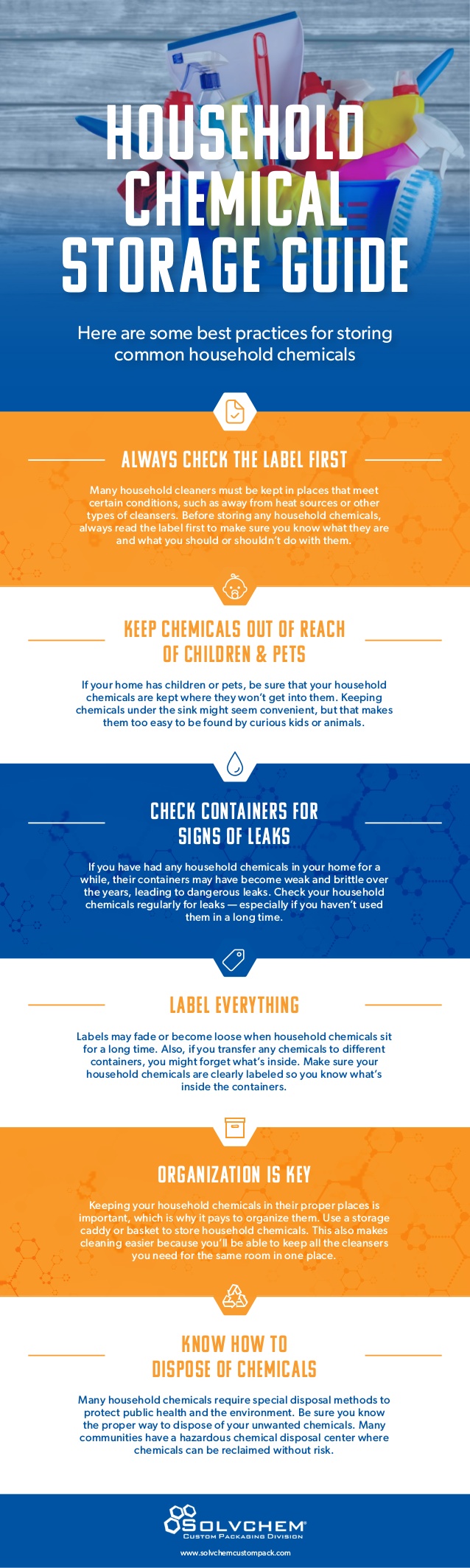
Household chemical safety is achievable with organization, secure storage, and clear labeling. A few careful habits create a safer home environment, protecting family members and pets while maintaining the effectiveness of your cleaning and maintenance products. Check out the infographic below for more information.
Infographic Embed Code: