(photo credit: Microsoft Stock Images)
Swimming pools are symbols of summer fun, but the chemicals that keep the water clean can also affect the air we breathe. Parents who spend hours with their children at the pool may notice irritation in their eyes, skin, or throat, but few realize that these same substances can impact respiratory health. Understanding how pool chemicals interact with air and water can help families enjoy swimming safely without compromising lung health.
What Happens When Chlorine Meets the Air
Chlorine is one of the most common disinfectants used to kill bacteria and algae in pools. When chlorine reacts with sweat, urine, or body oils, it forms chemical byproducts called chloramines. These compounds can build up in the air just above the pool’s surface, where swimmers inhale them with each breath. Chloramines are known irritants that can inflame the lining of the lungs and airways, leading to coughing, shortness of breath, or chest tightness.
Children are especially vulnerable because their lungs are still developing and they breathe more rapidly than adults. Indoor pools pose a higher risk since poor ventilation traps chemical vapors, allowing them to accumulate in the air. Outdoor pools are safer in this regard, but high chlorine levels can still produce noticeable irritation, especially on hot days when chemical reactions accelerate.
The Connection Between Pool Air Quality and Respiratory Symptoms
Regular exposure to chloramines and other volatile compounds can contribute to respiratory problems, particularly in swimmers, lifeguards, and children who spend significant time in the water. Studies have found higher rates of asthma-like symptoms in frequent swimmers, even in those without prior respiratory conditions. The effect is similar to exposure to secondhand smoke or strong cleaning products.
Short-term exposure may cause coughing, wheezing, or throat irritation, while long-term exposure can lead to chronic inflammation of the airways. Swimmers with asthma may find their symptoms worsening after spending time in chlorinated pools. These effects are not limited to competitive swimmers, as families who visit public pools regularly may experience similar outcomes if air quality is poor.
Steps to Reduce Exposure and Protect Your Family
Parents can take several steps to make pool time safer. Encouraging children to shower before swimming helps reduce sweat and oils that react with chlorine. Pool managers should maintain proper ventilation systems to remove chemical vapors and maintain chlorine levels within recommended limits. Ideally, the pool should have a strong air exchange system that draws in fresh air and pushes out humid, chloramine-filled air.
Choosing outdoor pools or well-ventilated indoor facilities can make a significant difference. Portable air quality monitors can detect high chemical concentrations, providing a warning before symptoms appear. At home, regular testing and maintenance of pool water balance help minimize harmful byproducts. Using high-quality fittings and plumbing materials, such as a PVC Schedule 40 coupling, ensures proper circulation and chemical dispersion, which also improves water safety.
For sensitive individuals, swimming alternatives like saltwater pools or natural pools can reduce exposure to harsh disinfectants. Saltwater systems generate chlorine at lower concentrations, and natural pools use plants and filtration to keep the water clean without synthetic chemicals.
What to Watch For
If anyone in the family experiences persistent coughing, difficulty breathing, or chest discomfort after swimming, it may be a sign of chemical irritation. Taking breaks from pool activity and seeking medical advice can prevent these symptoms from worsening. Hydration also plays a role, as dry airways are more susceptible to irritation.
Parents should keep an eye on their children’s comfort levels in the pool area. A strong chemical odor often signals excessive chloramines, not cleanliness. A well-maintained pool should smell fresh, not harsh.
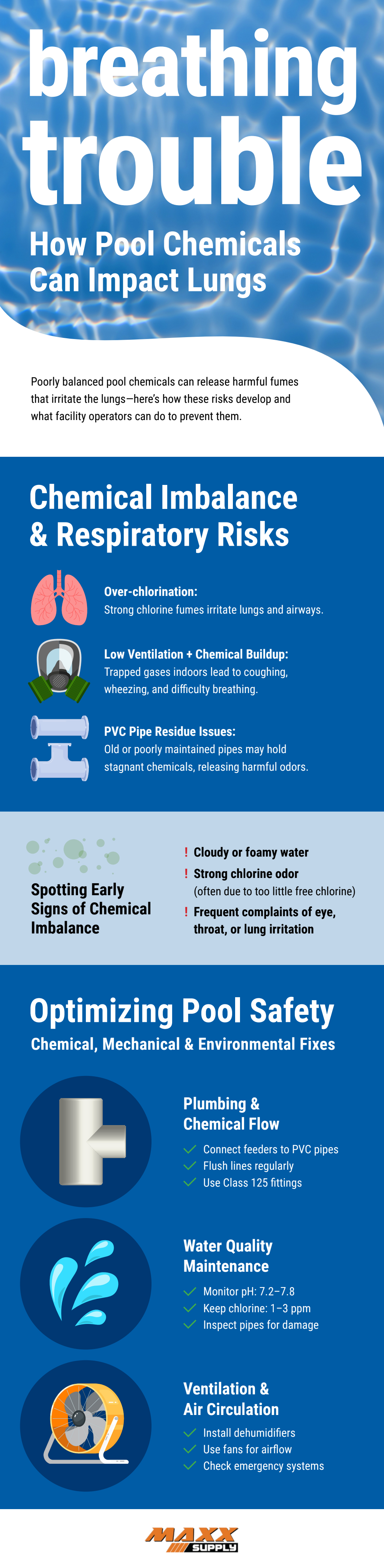
Pool maintenance is essential for safety, but so is protecting the air we breathe around it. Clean water should never come at the expense of lung health. Families can make swimming safer through awareness, prevention, and consistent maintenance practices. With a few mindful changes, pool time can remain one of the healthiest, happiest activities of summer. For more information, look over the accompanying infographic below.