
(photo credit: Microsoft Stock Images)
Youth sports can teach discipline, teamwork, and confidence, but more training does not always produce better athletes. A packed schedule of practices, private lessons, tournaments, and year-round competition can eventually drain a young player physically and mentally. Coaches are often among the first adults to notice the change, putting them in an important position to respond before burnout pushes an athlete away from the sport entirely.
Recognize the Change in Behavior
Burnout does not always look like exhaustion. A previously enthusiastic athlete might become irritable, lose interest in practice, struggle to concentrate, or appear unusually frustrated after small mistakes.
Performance may decline as well. The player who once volunteered for extra drills may begin moving through practice with little energy. Frequent complaints about soreness, poor sleep, or minor illnesses can provide additional clues. Coaches should pay attention to changes from an athlete’s normal behavior rather than comparing one player with another.
Ask Questions Before Adding Pressure
A performance slump is sometimes treated as a reason for additional training. If burnout is involved, that response can make the situation worse.
A private conversation can provide useful context. Ask how the athlete feels about practices, games, school, and recovery. Listen for concerns about playing time, pressure from adults, packed schedules, or fear of making mistakes.
Parents should be part of the conversation when appropriate. An athlete may be balancing schoolwork, another sport, family commitments, and practices that the coach does not see.
Create Space for Recovery
Rest is part of athletic development. Young athletes need time for sleep, physical recovery, school, friendships, and activities unrelated to their sport.
Coaches can help by varying practice intensity, building recovery days into schedules, and avoiding unnecessary training after demanding competitions. A short break can sometimes be more productive than another week of drills.
Practice can also include lower-pressure activities that reconnect athletes with what originally made the sport enjoyable. Even simple changes, such as a relaxed scrimmage or letting players choose a drill, can shift the atmosphere.
Facilities may invest in equipment, uniforms, or search for baseball scoreboards for sale, but the quality of a youth program ultimately depends on how it treats the athletes using those resources.
Keep Development Bigger Than Winning
Young athletes need to know that one poor game does not define their ability. Coaches can emphasize specific improvements such as better positioning, smarter decisions, or more consistent technique rather than judging success exclusively by wins and statistics.
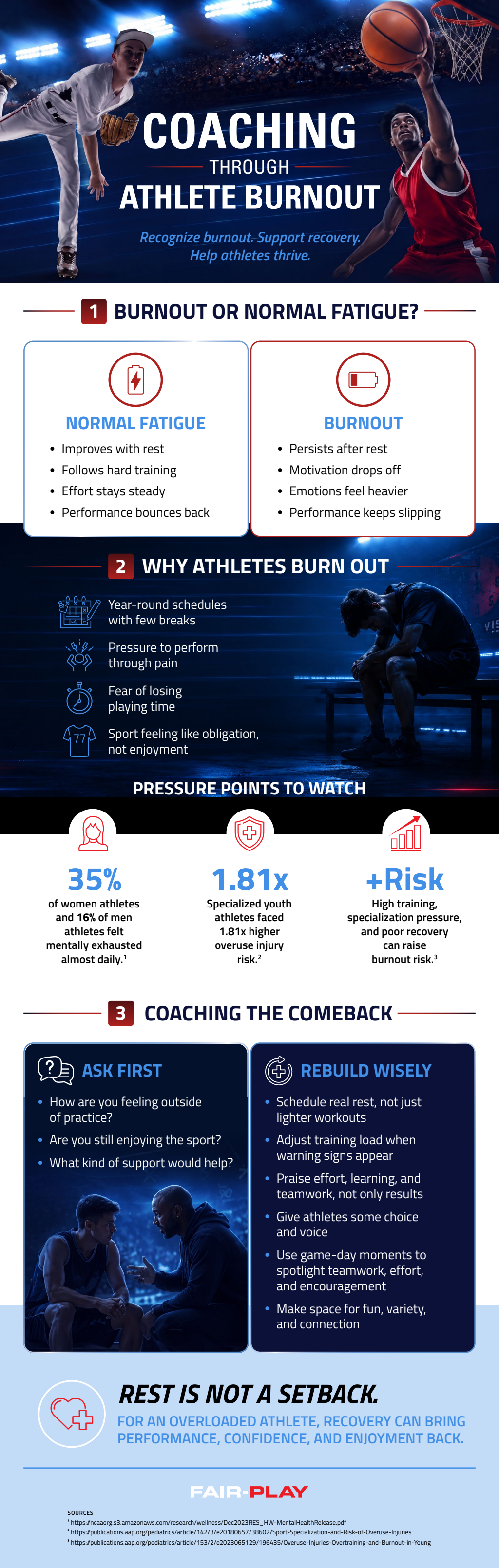
Burnout should not be dismissed as a lack of toughness. It can signal that the demands surrounding a sport have exceeded an athlete’s capacity to recover. Coaches who notice behavioral changes, communicate with families, adjust workloads, and make room for rest can help young players build a healthier relationship with competition. Look over the infographic below to learn more.
Leave a Reply