
(photo credit: Microsoft Stock Images)
Many families are looking for activities that encourage creativity while reducing screen time. Analog hobbies offer opportunities to learn new skills, spend meaningful time together, and create lasting memories. Whether your child enjoys photography, drawing, sewing, gardening, or model building, these hands-on interests can continue growing for many years with thoughtful planning.
Start With Interest Before Equipment
It can be tempting to purchase every recommended tool at the beginning of a new hobby, but starting small often leads to better results. Children may need time to discover which activities truly capture their attention.
Begin with basic supplies and gradually upgrade as skills improve. A beginner artist may only need quality pencils and sketchbooks, while an aspiring photographer can learn composition before investing in advanced equipment. This approach keeps costs manageable and avoids buying items that may go unused. Parents can also borrow equipment from friends, community centers, or local libraries that offer creative lending programs before making larger purchases.
Choose Quality That Will Grow With Your Child
Buying the least expensive option is not always the best value. Durable materials often last longer, perform better, and create a more enjoyable learning experience. Well-made tools can also be passed down to younger siblings or used for many years.
For hobbies involving photography, families may find good value by comparing used DSLR cameras for sale instead of purchasing brand-new equipment. A dependable pre-owned camera often provides excellent image quality while leaving room in the budget for lenses, memory cards, or photography classes.
Budget for Ongoing Costs
Many hobbies include expenses beyond the initial purchase. Paint, fabric, film, craft materials, replacement parts, and class fees should all be considered when planning a family budget.
Setting aside a small monthly hobby fund can make these purchases easier to manage. Children can even contribute through allowances or earnings from small household jobs, helping them learn valuable lessons about saving and financial responsibility. Planning ahead also makes birthdays and holidays easier, since family members can purchase supplies that support an existing interest instead of guessing at gifts.
Focus on the Experience
The greatest value of an analog hobby often comes from the time spent learning together. Working on projects as a family encourages conversation, patience, creativity, and problem-solving. Children also develop perseverance by practicing new skills and seeing gradual improvement over time.
Celebrating progress instead of perfection helps maintain enthusiasm. Displaying artwork, creating photo albums, sewing handmade gifts, or sharing finished projects with relatives gives children a sense of accomplishment and motivates them to continue learning.
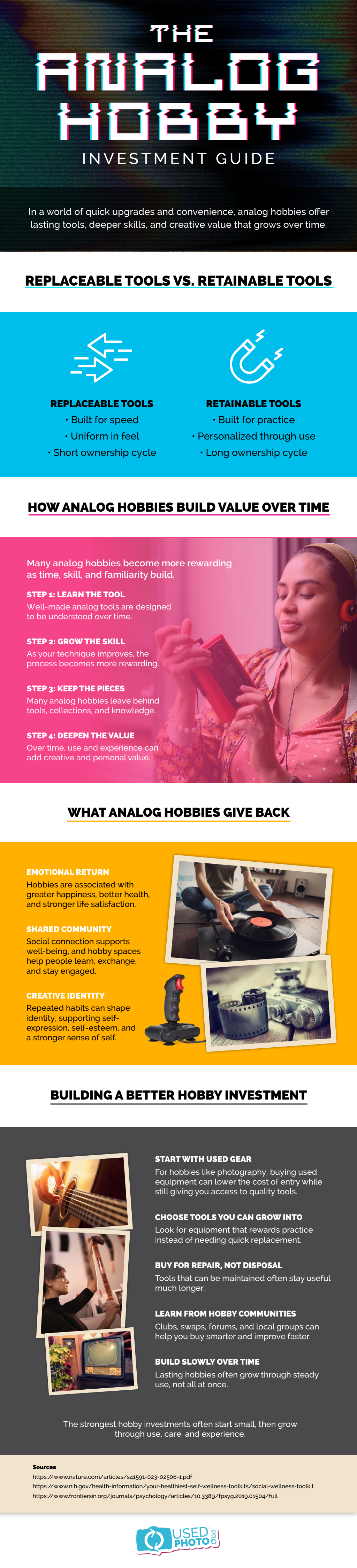
Analog hobbies provide much more than entertainment. They encourage creativity, strengthen family connections, and teach practical skills that can last a lifetime. By starting with simple tools, investing in dependable equipment, planning for ongoing costs, and focusing on the enjoyment of learning, parents can help children build hobbies that continue rewarding them well into adulthood. Check out the infographic below to learn more.
Leave a Reply